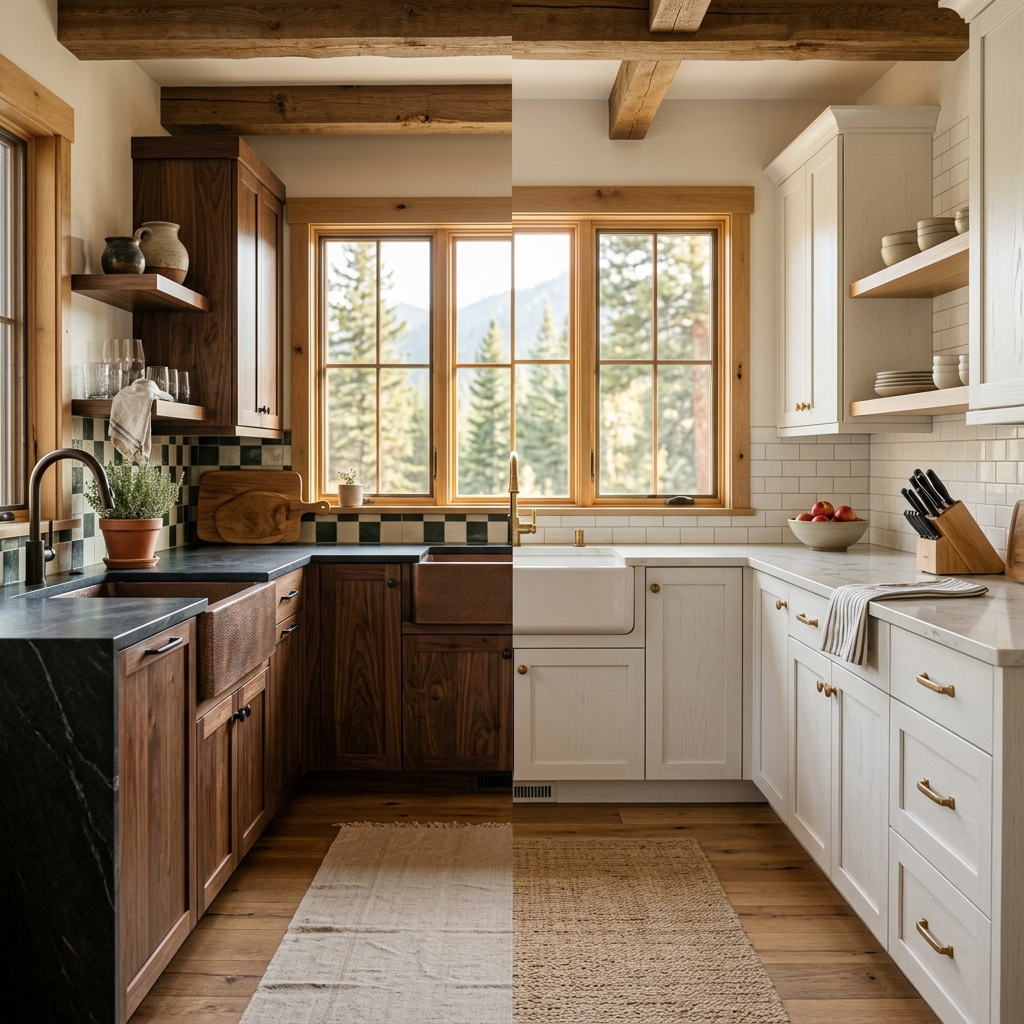
One of the most common questions homeowners ask when starting a kitchen project is whether to go with standard or custom cabinetry. Both are legitimate options, but they serve different needs and come with different trade-offs.
What "standard" actually means
Standard cabinetry comes in predetermined sizes, styles, and finishes. The boxes are pre-assembled, the doors are pre-finished, and the lead times are shorter. For most kitchen layouts that follow common dimensions, standard cabinets fit well and deliver consistent quality.
The advantage is speed and predictability. You know exactly what you're getting, and you can plan your budget with precision. Installation is faster because every piece is engineered to work together out of the box.
When custom makes sense
Custom cabinets are built to your exact specifications. Every dimension, every material choice, every detail is determined by the project. This matters most when your kitchen has unusual dimensions, when you want a specific wood species or finish that isn't available in a standard line, or when the design calls for something unique.
Custom work also makes sense for high-end renovations where every detail is intentional. If you're investing in natural stone countertops and premium appliances, cabinets built to that same level of specificity create a cohesive result.
Standard doesn't mean lesser. It means proven. Custom doesn't mean better. It means specific. The right choice depends on your project, not a label.
The cost difference
Standard cabinetry typically costs less per linear foot because it benefits from production efficiencies. Custom work is priced based on complexity, materials, and labor. The gap between them varies, but for a typical Montana kitchen, the difference can range from a few thousand dollars to significantly more depending on scope.
A practical approach
Many projects combine both. Standard cabinets for the bulk of the kitchen, with custom pieces for a unique island, built-in pantry, or specialty storage. This gives you the efficiency of standard where it works and the flexibility of custom where it matters.