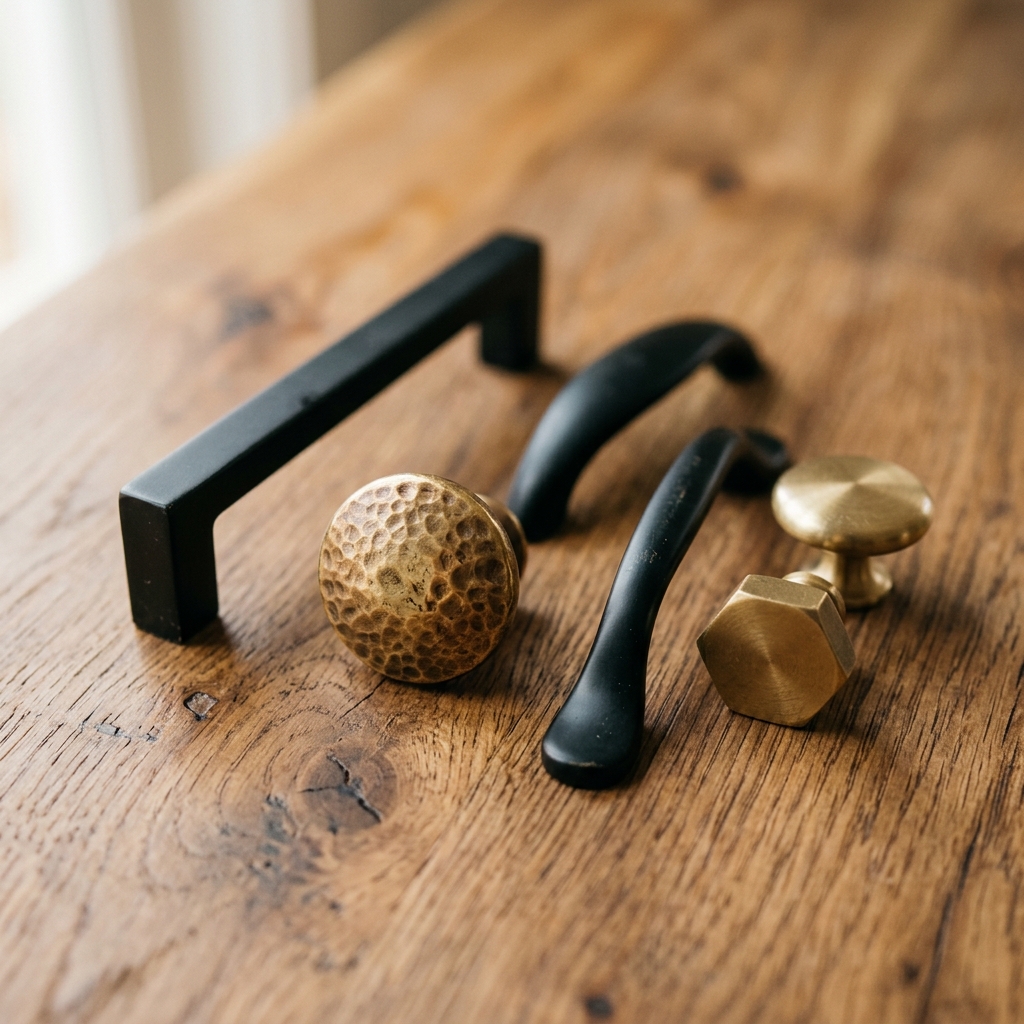
Hardware is one of the last decisions in a kitchen project, but it has an outsized impact on how your cabinets look and feel every day. The right pull or knob ties everything together. The wrong one creates a subtle disconnect you can't quite name.
Knobs vs. pulls
Knobs work well on cabinet doors. They're compact, classic, and available in an enormous range of styles. Pulls are generally better for drawers because they distribute the pulling force across a wider grip, which matters more as drawers get heavier.
Many kitchens mix both: knobs on upper doors, pulls on lower drawers. This isn't a rule, but it's a pattern that works well visually and functionally.
Finish matters more than you think
Hardware finish sets the tone for the entire kitchen. Brushed brass reads warm and intentional. Matte black is clean and modern. Polished nickel bridges traditional and contemporary. Satin bronze adds warmth without the brightness of brass.
Consider what else is in the room. Your faucet, light fixtures, and appliance handles all have finishes. They don't need to match exactly, but they should feel related.
Hardware is jewelry for your kitchen. It should complement the cabinetry, not compete with it.
Size and proportion
A common mistake is choosing hardware that's too small. On a 36-inch base cabinet, a three-inch pull can look lost. Most designers recommend pulls between four and eight inches for base cabinets and proportionally smaller for uppers.
Hold the hardware against the door or drawer front before committing. What looks right in a showroom display may feel different on your actual cabinets.
Quality you can feel
Inexpensive hardware often feels hollow and light. Quality hardware has weight, solid construction, and a finish that won't wear through in a year. Cabinets get opened and closed thousands of times. The hardware should be built for that.